You are using an out of date browser. It may not display this or other websites correctly.
You should upgrade or use an alternative browser.
You should upgrade or use an alternative browser.
What Does this Say?
- Thread starter MollyMay
- Start date
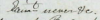


Bay Horse
Can be a bit of a dark horse
Hmm... original a bit clearer (but not much!)
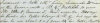
Frequent punctuation would be a big help too. So - to summarise - hath four children still living (to late wife Susannah), Susannah who is 20 now and living in this house with base child Matilda... Ellen 8, Emma 5.
Three words... the first I think it is an abbreviation, possibly starting in 'e', ending in 't'. Second looks like 'never'.
Frequent punctuation would be a big help too.
So - to summarise - hath four children still living (to late wife Susannah), Susannah who is 20 now and living in this house with base child Matilda... Ellen 8, Emma 5. Three words... the first I think it is an abbreviation, possibly starting in 'e', ending in 't'. Second looks like 'never'.
Last edited:


MollyMay
Knows where to find the answers!
Ok, I read it as Claim't' (claimant) never & c
but that makes no sense, and I am far from sure that the first letter/s before 'aim' and the superscript t is cl.
Thomas was a fellowship porter (whatever that is) and had been widowed and left with 4 daughters, the oldest already being in the workhouse with her son,
the (BC in the above).
but that makes no sense, and I am far from sure that the first letter/s before 'aim' and the superscript t is cl.
Thomas was a fellowship porter (whatever that is) and had been widowed and left with 4 daughters, the oldest already being in the workhouse with her son,
the (BC in the above).

Bay Horse
Can be a bit of a dark horse
The word seems to appear from time to time, and I can't make it out. I'm looking back over the previous entries, some of which are in a different hand. This is glaringly obvious, I'm sure.
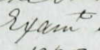
Examine. Examinant (?)
I'm going with Examinant, abbreviated. 'Examinant never ... (?)'
Examine. Examinant (?)
I'm going with Examinant, abbreviated. 'Examinant never ... (?)'
Last edited:
Bay Horse
Can be a bit of a dark horse
Could it be 'Examinant remembers his' and the registrar has then amended 'his' (referring to his father) to 'he says his father'? Therefore it doesn't actually make sense anyway and it's a clerical error. There is definitely an amended word.
'He remembers his' (father).. then becomes 'He says he thinks his father belonged to B.G.'.
'He remembers his' (father).. then becomes 'He says he thinks his father belonged to B.G.'.
MollyMay
Knows where to find the answers!
That is the first thing that has made any sense - thanks'He remembers his' (father).. then becomes 'He says he thinks his father belonged to B.G.'.



MollyMay
Knows where to find the answers!
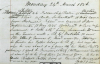
I think it’s ‘E(x)am(inan)t never etc’ with the etc standing for ‘showed just cause’, but these poor law records contain so many weird and wonderful abbreviations, a lot has to be second guessed
I suppose the thought never crossed their minds that over 150 years later someone would want to read and understand their entries


AnnB
Editor in Chief who is Hot off the Press!
I suppose the thought never crossed their minds that over 150 years later someone would want to read and understand their entries