Northallerton Workhouse

kernowmaid

Our very own Cornish Maid
Oh dear. My Gt Gt Granma died 1905 in the workhouse. This is her death cert:
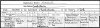
COL016322_2018-3-Ann_Elizabeth_SCOTT-page-001.jpg
I am surprised how this has made me feel ... ashamed, disappointed ...

Her only child was my Gt Grandad - he was living in York at the time, with wife & 4 young children - one of whom he used to take with him every Saturday to visit his mother (who "was not kind to" his wife, according to a family letter).

So ... did my Gt Granma refuse to have her mother-in-law live with them?
Or was the workhouse also the hospital?

I've been reading up about the Northallerton workhouse - it sounds awful.
There was a small cottage hospital in the town - so why wasn't she there?
The workhouse was later converted into the Friarage Hospital - so would it already have had medical facilities?

I know I'll never know the answer for sure, but am interested in how others "read" this - do you think this is a case of hard-heartedness, or was she in the best place? (I assume that "Senilis" = Dementia ... so maybe she was "at risk" ... Or am I just making excuses?!)

Jane
 
It could well be that the family could not look after her - lots of children... lack of income.... many reasons, which is why she was in there.

I see from the Workhouse Website that the North Yorkshire Record Office has admissions and discharge registers that would cover the period concerned.

A bit of a trek for you ;) but maybe an email would bear fruit?
 
Jane she could have been "unmanageable" if she had some form of dementia. From working in nursing homes over the years I can tell you that some dementia people cannot be cared for by family due to personality issues. She may have been violent or just terribly confused and prone to wandering and putting herself in danger.
 
Thank you guys.
An e-mail will soon be winging its way to the N Y Record Office ... and thank you Peter for the definition of "Senilis". (Doesn't cheer me much, but I do like to be accurate :rolleyes:)

Jane
 
Oh dear. My Gt Gt Granma died 1905 in the workhouse. This is her death cert:
View attachment 7970
I am surprised how this has made me feel ... ashamed, disappointed ...
Jane

Absolutely no reason for you to feel shame Jane. There was & still are many reasons why people have no home left to stay in on their own, & in a workhouse she would have had company-perhaps good & bad- also medical assistance if needed.
Her son may not have had room enough for her & it's quite possible that his Mother may have resented the wife for taking her from the mother as some see it, or her general health may have required more assistance than a young wife could give.
Now you've found her be happy & hope to find her final resting place.
 
Ah, Kernowmaid - I know that feeling. My grandma, with whom I lived until I was nine years old, was abandoned to the Workhouse in 1899 as a child and split from her brother from many years until he came of age and came looking for her. Only when I started doing family research did this come to light; Grandma and her brother kept it a secret all their lives, and as adults were very close, closer than most siblings. Initially I was horrified that someone I knew and loved should have had such a dreadful start in life, but the bottom line was that the Workhouse, despite its reputation, undoubtedly saved people from starving to death and offered medical help when ill.

I've found instances of other reasonably close family members being 'in the Workhouse' when ill. Grandad, when he had pneumonia and had to learn to walk again, and his sister who died of tb there age ten - her death cert states her place of death as the local union workhouse (not even 'infirmary'). The family all had reasonably good factory jobs but would not have been able to afford private medical care. In fact, I have a letter written to my grandfather in hospital by his mother - it's in the original franked envelope - where she asks Grandad if he could request to stay where he was a week longer as 'Nellie was in bed' and she was run off her feet. They all seemed quite happy with this arrangement, although the institution was still operating as a Workhouse for many years after that. The letter is quite insightful, and suggests that it was the norm for working class people to receive care there when needed. It was acceptable at the time, so perhaps we are attaching stigma where there was none.

I suppose there are many reasons why your great-grandma couldn't handle having her mother in law with her. She may have had health problems herself. I suspect they just didn't get on.

Your Great-great grandma probably wasn't suffering from dementia, as (aside from Peter's useful info, which I didn't know either) I expect she would have been in an asylum if this had been the case. Both of my paternal grandparents ended their days there.
 
No need to feel ashamed whatsoever. I had a Grandfather born in the Workhouse. sometimes it was more a hospital. Yes Senilis means old age. I had an ancestor who died of Senile Decay - sounds awful but nothing to do with Dementia
 
I too have an ancestor who died in the workhouse, but I know that he had a loving family nearby and that the reason was that he became very ill and that the workhouse was, in effect, the only available geriatric ward in the community. Don't be ashamed of your ancestor nor disappointed in her family - they were probably all doing the very best they could to keep her safe in her old age.

Sue
 
I don’t think there are many of us who haven’t got an ancestor or two who weren’t in a workhouse at some stage in their lives, and I think we have been a bit indoctrinated into thinking workhouses were the stuff of nightmares, thanks to the likes of Charles Dickens :rolleyes: However, I think workhouses, on the whole, provided a much needed refuge for anyone who needed protecting, whatever their age, in an age where there was nothing like the facilities we have these days.
 
Very true Ann. My gg grandmother was at her home in 1871 but died in Dudley Road Workhouse Birmingham a year later. She had contracted TB and had been admitted to the Infirmary wing through the "Archway of Tears" as she only had my teenaged g grandfather and his 7 year old sister to try and care for her.
 
I've had a rootle in the papers and found this in the Edinburgh Evening News of the 2nd December 1896 (although it refers to Birmingham)
Edinburgh Evening News 2nd December 1896

The Birmingham Coroner yesterday held two inquests on men who had committed suicide, one of whom had done so apparently because of his dread of entering the workhouse. Commenting on this fact, the coroner said the workhouse was no more than a most honourable provision on the part of the State for those who, through no fault of their own, came to want shelter. The sooner the public disabused their minds of this prejudice against, workhouses the better. There was something in a name, and he could not help thinking that the name might be changed. It was quite different from what it used be in the olden time. Nine-tenths of the people who went to the workhouse now could not work, and if the name was changed a great deal of prejudice would be removed. Those who lived in this century knew that, apart from removals from one's families, a more comfortable home did not exist.
 
No need to feel shame. I have been reading a lot about workhouses recently and whilst most caused horrors, they were a place where people were feed, clothed and given bed. Your G-G Grandmother died in the winter and would have been given medical care. It wasn't perfect but in many ways the forerunner of our health service. Other residents would also have given her comfort. One of my relatives tried supporting someone at home but the newspaper reported them as having starved to death in a bitterly cold room. Not all relatives were in a position to help or wanted to. It was harsh times and most families suffered at sometime.
 
Back
Top