Occupation?

MollyMay

Knows where to find the answers!
Can anyone offer an explanation to the occupation of 16 year old Henry J Daniels b1875?
1891 census Bermondsey RG12/371/32/16

upload_2023-6-27_16-29-19.png

Whoever worked on the census, after the pages were submitted, has added numbers to many of the occupations and appears to have underlined certain parts of the occupations ie Book in Bookseller, Leather in Leather dresser etc. as you can see from his brother's - the line above his. The mysterious C in Henry's occupation is underlined as well.

By 1901 his occupation is given as Coachman non domestic and the word 'groom' has been added by another hand. By 1911 he is a 'tramway motorman'.
 
That is what FMP's Transcription says, I wondered if the 'C' is again another mark by the same hand who has done the underlining and added the numericals against some occupations.
That said what is a Town Traveller, and why does he need an assistant?
Something to do with (taxi) cabs perhaps?
 
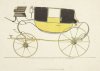
Town Coach: This coach was very like a landau, but it had a hard top and was typically massive, drawn by up to six heavy horses. May also be referred to as a closed carriage. Only the very rich could afford a town coach and it would typically have armorial bearings painted on the doors.
 

Attachments

  • Town_coach_1816.jpeg
    Town_coach_1816.jpeg
    38.5 KB · Views: 2
I'm wondering if this could be another explanation for the term 'Town Traveller'? From the early 1800's, there are hundreds of adverts in the papers for the position of Town Traveller, which appears to be the title used for someone who was employed as a representative for a business, plying their employer's goods around potential customers and also collecting money owed. Here's an example of a chap who got into trouble -
The People 3rd April 1892
Francis Walsh, traveller, surrendered to bail on a charge of having embezzled the sums of £3 7s. 3d., £1 16s., and £4 7s. the moneys of Miss Julia Taylor, his mistress. The prosecutrix is a mica merchant and ornamental shade manufacturer, carrying on business at Hatton Harden, and the prisoner was employed by her as a town traveller and collector. It was alleged on the part of the prosecution that the amounts stated and other sums had not been accounted for. In one instance, it was stated, one of the firms from whom money had been received had paid twice before the embezzlement was discovered. When accused by prosecutrix of not having paid over one account, he at first stated he had done so, and then said, "I must have been a madman, and suppose I shall have to pay for it."—Four months' hard labour.
This could suggest that the 'C' stood for Collector? I know your chap went on to work in transport, but as he was only 16 he might have tried something else first? Just a thought :)
 
I think that someone had their own code as various letters seem to pop up against the occupations from time to time.

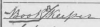
Two pages on from Henry's entry is one for William Liddiard, whose occupation was that of Junior Clerk. That too has an extra C added:
upload_2023-6-28_8-51-30.png

I don't know who this would have been, but not the enumerator, as the handwriting is different. Perhaps someone else who was considering CODOTs (Classification of Occupation and Directory of Occupational Titles :rolleyes:) or even MLHs (Minimum List Headings) that identify the type of employer.
Just not convinced that it has anything to do with the original census at the time. :)
 
Could a Town Traveller be the equivalent of todays commercial traveller. Calling around town finding customers for his goods. Selling, taking orders and collecting payment.
Agree with @AnnB
I agree.
I grew up in a village shop. The visit of a Traveller always meant me finding an excuse to go into the shop for something ("I need some sultanas for my scones").
I was in my teens, and the Travellers were always young, good-looking and flirty!

Jane
 
Back
Top